
Understanding the Root Causes Behind Random Charging Interruptions
Why AC EV charging randomly disconnects—an in-depth analysis of grid fluctuations, PE ground noise, pin tolerances, and protection logic.
Weak Grid & Voltage Drops
PE Ground Interference
CP/PP Pin Mismatch
Intermittent disconnections during AC EV charging—frequently reported by end users as “EV charger keeps stopping” or “AC charging randomly disconnects”—present one of the most complex diagnostic challenges for fleet operators, EVSE installers, and OEM engineers. Because AC charging relies on a multi-variable loop involving grid stability, Control Pilot (CP) signaling, physical interface tolerances, and vehicle Onboard Chargers (OBC), a failure at any node can prematurely abort the session.
1. Power Grid Fluctuations: Weak Grid and Voltage Drop Effects
Voltage instability beyond the operating limits of the vehicle’s Onboard Charger (OBC) is a primary trigger for automated safety cut-offs. When supply voltage drops below or spikes above specified thresholds, the OBC immediately trips overvoltage or undervoltage protection.
2. PE Ground Noise: How Electrical Interference Disrupts AC Charging
During AC charging, the vehicle chassis ground connects directly to the AC grid’s Protective Earth (PE) line via the charging connector’s earth pin.
If high-power industrial machinery, inverters, or non-filtered switching equipment share the same PE line, high-frequency ground noise is introduced. This noise degrades the 1 kHz PWM signal on the Control Pilot (CP) and distorts the Proximity Pilot (PP) resistance detection. When noise corrupts signal voltage levels beyond IEC 61851 limits, internal CAN bus communication inside the OBC drops out, causing an immediate emergency stop.
3. Connector Fitment & Physical Interface Issues
3.1 Loose Power Contacts & Thermal Cut-Off
Worn or loose power terminal contacts increase electrical resistance at the vehicle inlet. Under continuous high-current loads (e.g., 32A single-phase), localized resistive heating triggers internal NTC temperature sensors, forcing the vehicle or charger to shut down to prevent port damage.
3.2 Signal Pin Mismatch & Micro-Vibration
Slight mechanical length discrepancies or socket wear on CP/PP signal pins can cause momentary contact loss, especially when subjected to environmental vibrations or heavy cable tension. Utilizing optimized longer CP/PP pin geometry improves mating depth across diverse vehicle inlets.
4. False RCD Tripping in AC EVSEs
Mode 2 and Mode 3 EVSEs contain internal residual current detection (RCD) PCBs designed to sense Type A AC leakage (30mA) and DC smooth leakage (6mA). Sub-standard sensor calibration or high grid harmonics can cause false positive tripping, erroneously shutting down active charging sessions.
5. Accidental User Actions & S3 Switch Triggers
Unintentional physical interactions frequently interrupt charging. Users may accidentally press an EVSE stop button or bump the mechanical latch on the connector handle, engaging the internal S3 micro-switch. This immediately signals the charger to open its contactors prior to plug removal.
Summary: Mitigating Random Charging Dropouts
- Verify PE Grounding: Ensure dedicated, low-noise grounding on site to protect CP/PP signaling integrity.
- Enforce Certified Standards: Select EVSE hardware fully compliant with IEC 61851-1 and IEC 62752 featuring calibrated RCD protection.
- Inspect Physical Interfaces: Conduct routine checks on connector pins, latch engagement, and terminal thermal performance.
- Adapt for Weak Grids: Utilize chargers with adaptive firmware logic capable of handling minor grid voltage sags without dropping sessions.

Do AC EVSE with Double Insulation Require a Protective Earth Connection and an RCD?
EVSE Regulatory Standards & Safety Architecture Is PE & RCD Required for Double-Insulated AC EVSE? An engineering breakdown comparing [...]
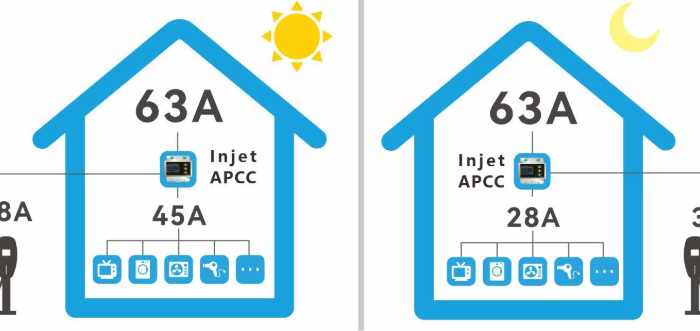
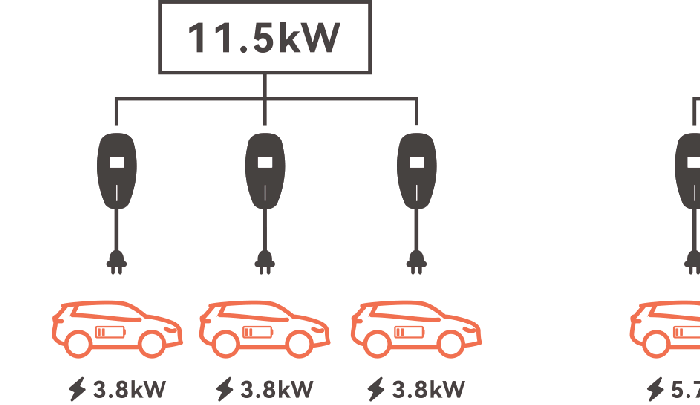
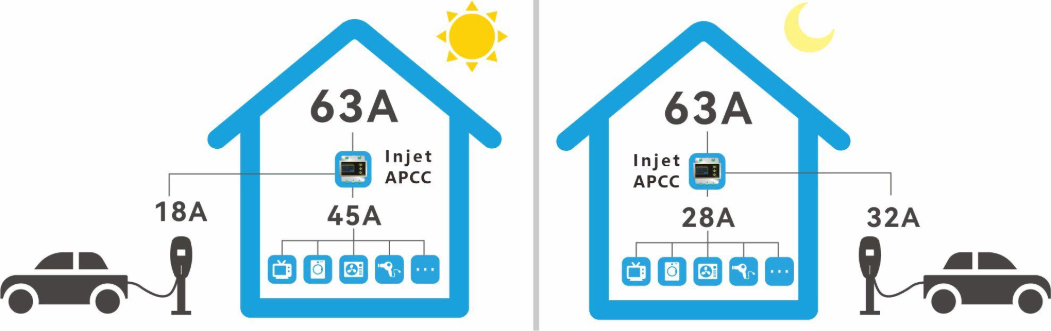
Dynamic Load Balancing (DLB): Why It’s Crucial for Your EV Charger
Smart Energy Management & Grid Efficiency Guide Dynamic Load Balancing (DLB) in EV Charging: The Complete Guide Ever experienced [...]
⚡ EV Charging Modes Explained: Which One Powers Your Drive?
EV Charging Infrastructure & Technical Guide Understanding the Four EV Charging Modes: A Complete Guide From basic domestic sockets [...]
⚡ Why Is My 7.4kW AC Charger Only Delivering 6.4kW? Common Causes Explained
EV Charging Engineering & Efficiency Guide Why Your 7.4kW AC Charger Only Delivers 6.4kW (or Less) Answering one of [...]
Why Does My EV Charger Randomly Stop Charging? 5 Common Causes Explained
EV Charging Engineering & Troubleshooting Guide Understanding the Root Causes Behind Random Charging Interruptions Why AC EV charging randomly [...]
How Much Power Can a Mode 2 Portable EV Charger Deliver?
EV Charging Industry & Technical Guide Understanding the Limits and Possibilities of Mode 2 EV Charging How much power [...]